
All organizations are perfectly designed to get the results they get! — Arthur Jones
Improvements in Safety, Health, Environment and Quality (SHEQ) come from the system
that unifies and brings out the best in everyone.
RISK MANAGEMENT
- Hazard identification processes
- Risk assessment & mitigation processes
POLICY, OBJECTIVES & PLANNING
- Management commitment & responsibility
- Accountabilities of managers
- Appointment of key personnel
- Management System implementation plan
- Third party interfaces
- Coordinating the emergency response plan
- Documentation

ASSURANCE
- Internal investigations
- Performance monitoring & measurement
- Management of change
- Continuous improvement of the system

TRAINING & PROMOTION
- Training & education
- Communication

SHEQ2GO tools support all of the elements that make up a successful SHEQ management system.
Introduction to SHEQ
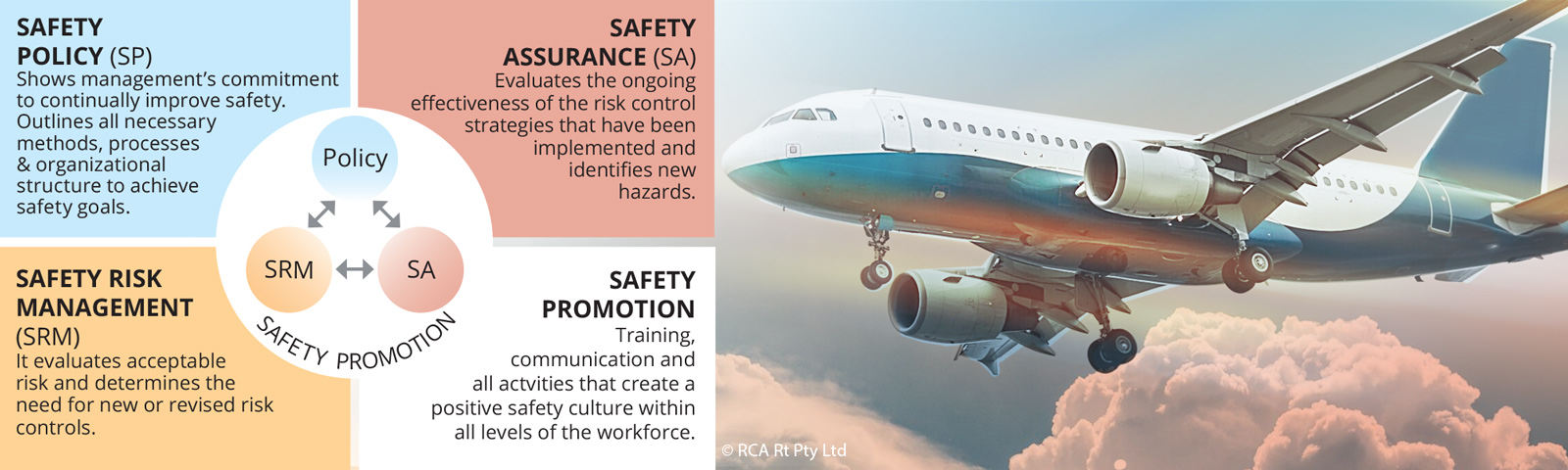
The extraordinary improvements in Safety in the aviation industry have come through the development of the systems that support the outcome. The diagram above, from the American Federal Aviation Authority (FAA), illustrates famous “Safety Promotion” program. Long-term, broad-scale, and positive outcomes for Safety, Health, Environment, and Quality arise from a system that is integrated inside the organisation, rather than from individual efforts or isolated activities.

Management systems typically cover the four themes shown in the image above, made famous by the FAA. The management system may support Safety, as shown in this case, or Health, Environment, or Quality. But in all cases, there is a need to set:
Policy which defines necessary resources for the system. Assurance that confirms & evaluates the effectiveness of existing systems & improvements. System that identifies hazards and offers solutions to manage & reduce risk. These three themes will not succeed unless people in the organisation understand and support them. Promotion, training & communication are therefore essential.
A. Policy
Policies set out the objectives and planning needed to define the overall scope of the system. Policies mean real commitment: management must take responsibility, and everyone else in the organisation should do the same — accept responsibility to achieve the goals successfully. Policies should keep a record of who is accountable for what, and provide details about implementation. Policies often paint a broad picture of the future, but also dwell in detail about immediate actions (e.g. those to be taken in the case of an emergency).
B. Assurance
Assurance guarantees that the organisation is really doing the things it was supposed to do, and is investigating the reasons for any deviation. Assurance ensures that repeating processes are done properly, and projects are planned appropriately and executed methodically.
C. System
Risk management is the active search for hazards that might limit the success defined by the policies. It aims to understand the extent of the threat, assign priorities, and then identify and put in place actions that will eliminate risks, or at least manage them at a safe level.
SHEQ2GO software will help you and your organization to build and maintain a successful SHEQ management system.
Risk management

1. Hazard identification processes
SHEQ2GO helps you record and monitor risk levels for all SHEQ improvement programs.
A systematic approach to managing Safety, Health, Environment, and Quality (SHEQ) delivers the most sustainable long-term outcomes. A critical component of this approach is to proactively identify the hazards and implement effective countermeasures, supported by ongoing processes (such as regular audits). It ensures the controls remain effective and are continuously improved. Furthermore, organisations are legally required to ensure such processes are maintained.
SOPHISTICATED HAZARD REGISTER.
SHEQ2GO offers many configurable fields (text, numbers, lists, Booleans, multichoices, charts, time & date, etc.), forms and reports to help you customise the hazard register to suit any particular need. If you can imagine it, with SHEQ2GO you can build it. Sophisticated filtering enables easy searches and recognition of patterns. Root cause analysis tools (including 5WHYS), Ishikawa / Fishbone analysis and Events and Causal Factors trees, provide powerful approaches to understanding hazards.
2. Risk assessment
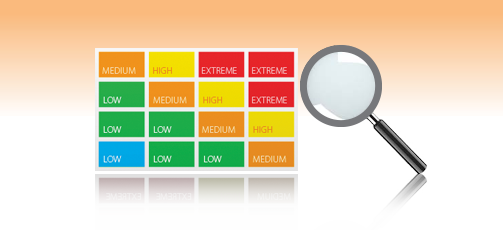
The risk matrix is customizable, and it can match the matrix at any particular site. It allows tracking of the “as found” risk (usually higher risk), and the “mitigated risk” (lowered risk), so that the team easily sees risk exposure and progress. Tools in the software help you find solutions that remove or reduce risks to a level that is as low as reasonably practical (ALARP). This is a legal requirement in most Safety, Health and Environmental situations.
USER CONFIGURABLE AUDITS
If the problem cannot be permanently resolved through engineering solutions or by neutralizing the effects, then an ongoing review process with audits may be necessary. SHEQ2GO helps build user-configurable audits that may be carried out on portable devices (mobile phones, pads, etc.).
Assurance
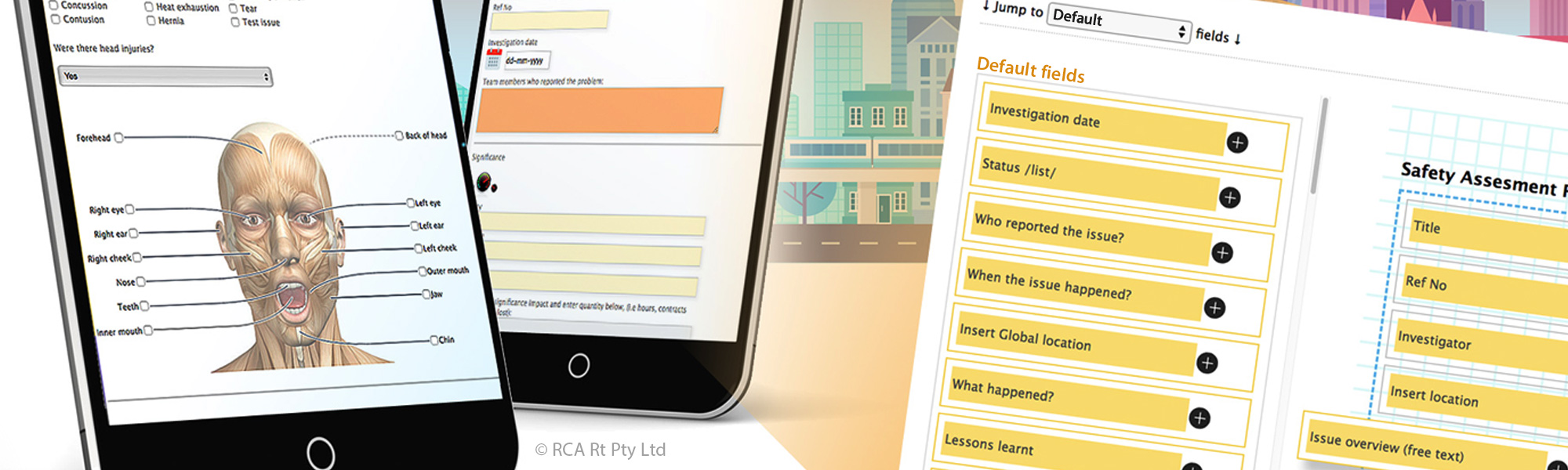
SHEQ2GO helps you design custom forms and audits for internal investigations, monitoring & management of change.
1. Internal investigations
SHEQ2GO offers a range of problem-solving solutions, from 5WHYS through Ishikawa/Fishbone analysis and on to Events and Causal Factors trees for the most complex investigations. Human Factors considerations are strongly supported, including ICAMs and HFACS processes.
The Events and Causal Factors Chart (tree) complies with the International standard IEC 62740:2015 (© IEC 2015). It is used in complex investigations to gather and visualise the events and the causes that have led to a failure, and from failure into (many) consequences. All the facts and evidence are consolidated in one place, along with the actions taken to investigate the issue and prevent recurrence.
2. Monitor & measure performance
The action management system within SHEQ2GO tracks actions needed during the investigation, as well as actions raised to eliminate the possibility of future failures. User-configurable reports, charts and graphs track data and highlight changes and improvements in performance.
3. The management of change
The project management tool within SHEQ2GO enables planners to map the full sequence of events, with defined start and finish times, including all required tasks, considerations, and task dependencies leading up to each event. It also supports the addition of details, comments, and assigned actions, allowing the implementation team to maintain a shared and up‑to‑date understanding as the project progresses.
4. Continuous improvement of the system
The entire management system can be centrally maintained within the SHEQ2GO database, simplifying data extraction for reports and a visual dashboard, that shows trends and highlights opportunities for improvement. The integrated action management functionality establishes clear accountability for information and follow‑up actions that drive ongoing enhancement of the system. Built-in audit features help you collect & review evidence, which is excellent for getting improvement ideas and monitoring of progress over time.
Policy, objectives and planning
1. Management commitment & responsibility
The key document in the management system is the Policy Statement. It is created & endorsed by senior management. Normally, it should plainly state management’s commitment to achieving goals through the management system. Policy must include: 1. objectives, 2. well-defined roles, 3. responsibilities, 4. commitment to legal & regulatory demands, and 5. explain how employees participate in continuous improvement. The policy is generally a one-page document, which sets the tone for Manuals, Standard Operating Procedures (SOPs) & other documents (which then detail how the objectives will be achieved). All documents can be loaded under the Help menu in SHEQ2GO, allowing the entire organisation to easily access, read & understand their roles.
2. Accountabilities of managers
Best results in a SHEQ management system happen when all participants know their roles, understand the importance of success, and take personal responsibility. But it can happen only if the participants also know their activities and accept accountability. Documents that explain roles & accountabilities can be loaded into SHEQ2GO’s Help menus for the convenience of the entire organisation.
3. Appointment of key personnel
SHEQ2GO can easily create forms, audits, quizzes and other documents, fully configurable. The system administrator can specify fields that enable the identification of key people or specific roles. The accountability then becomes clear. The action management system may be used to track who is responsible for completing tasks, audits and other activities. These can be integrated into the site's maintenance management system or managed entirely within SHEQ2GO.
4. Management System Implementation Plan
SHEQ2GO and its management-of-change toolkit will help you develop a well-structured management system implementation plan. It will assist you with the detailed planning of change, and then track the progress of key activities & events. It visually represents critical milestones and the sequence of activities required to achieve them. Activities & events can be revised and updated as new information emerges, hence your plans will remain current and responsive throughout implementation.
5. Third-party interfaces
Use SHEQ2GO to set up audits, which can be opened and filled in on mobile phones, tablets, etc. You can ensure that the interface with third parties is in accordance with agreements.
6. Coordination of the emergency response plan
Identifying hazards correctly is the key ingredient of developing the best and swiftest responses to potential incidents. You can configure SHEQ2GO with various checklists, and give personnel immediate access to them via their mobile devices, so that they can activate Emergency response plans immediately during an emergency. The emergency coordinators & key personnel can monitor, in real time, the progress of first responders against their checklists, detect emerging issues, and determine when (and if) extra support (or new resources) is required.
7. Documentation
TIP: Policies, objectives and plans can be documented and shared within the library of documents under “Help”.
Personnel's qualifications, like operator licenses and regulators’ approvals, should be reviewable, but also kept securely. SHEQ2GO can be used to create Checklists so that personnel can fill them in, attach photos of their documentation, at their own convenience, using their mobile phones, tablets or any computing device. The system manager can review documents and use filters to see when accreditation will expire.
Training and promotion.
1. Training & education
Ensure that all personnel own the necessary qualifications, such as operator licenses and regulatory approvals. It is a critical component of a robust management system.
Documents library: SHEQ2GO provides a secure environment where these documents can be stored and reviewed by system managers.
Quizzes: Software can quickly set up quizzes, which you can use to assess knowledge and track progress.
Custom checklists: Using customizable checklists, personnel can easily upload photos of their documentation at their own convenience using mobile phones, tablets, or any computing device.
Accreditations: Management can then utilise sophisticated filters to monitor accreditation status and identify exactly when specific qualifications are set to expire.
2. Communication
SHEQ2GO ensures that every team member remains informed
& aligned with organisational goals.
Library of policies, plans & objectives: SHEQ2GO helps you integrate a library of necessary documents under “Help,” providing a single source of truth for the entire workforce.
Real-time communication: Furthermore, SHEQ2GO facilitates real-time communication during critical events; for example,
Emergency checklists: Personnel can quickly access emergency checklists via mobile devices. Coordinators can monitor progress and offer real-time help to first responders.
This integrated approach to action management clarifies tasks, responses, and accountability. It guarantees that follow-up actions may drive the ongoing improvement of the safety culture.
 TIP: Use the management-of-change toolkit to plan the rollout of new training programs. Observe critical milestones and the sequence of activities needed to guarantee that your team is well prepared for it.
Benefits
Paint the SHEQ landscape of your organisation.
Complex problems occur where multiple organisational, environmental & personal factors align and will impact the outcome. Your investigations will then change significantly: from (a) finding a single root cause to (b) understanding the complex web of factors that led to the damaging outcome.
